Thursday, April 3, 2014

Tires 101 - Be An Expert!

Tires 101 - Learning the Tire Categories

Tires are purpose-built. In other words, they are built using the specifications that are best suited to the job that the tire will perform. These specifications determine the materials that the tire is made of as well as the tread patterns and the overall look of the tire. These build specifications can be broken down into the following categories: Touring, Performance, All-Season, Light Truck, and Winter.

Touring
I'm sure you heard the term "touring", but what does that mean? Touring means traveling at highway speeds for prolonged periods. Touring tires are designed to give a quiet, excellent ride with top-notch handling at highway speeds. This type of tire has a non-aggressive tread pattern with straight ribs that allow the channeling of water. Another characteristic of the touring tire is long tread life. Long tread life is certainly a plus but the downside is that the hard compound that makes up this tire tends to freeze in winter, which in turn, sacrifices traction in bad weather.'
 
Performance
This type of tire does a great job at highway speeds. It has an aggressive tread pattern that provides great traction and handling during cornering and aggressive driving. These tires have heavy or large shoulder lugs for cornering traction and a wide smooth face for gripping the road surface. Evacuating water is usually not a strong point of this type of tire. They are made of a softer rubber compound which aids traction but wears out quickly. Performance tires are usually short-lived. Most "Summer" tires fall under this category.'
 
All-Season
This category includes the most versatile tires. All-season tires have a dual purpose. First, the tread patterns squeegee, or remove water from underneath each tread block maximizing rubber-to-road contact. Secondly, the tread patterns allow the "pumping" of water, ice, and snow away from the tire. These tires are also made up of a compound that resists freezing, ensuring better traction during icy conditions. Another great characteristic of the all-season tire is its performance in great weather. They are comparatively quieter than performance tires and their blocky tread pattern allows good traction and handling in the wet and dry.'
 
Light Truck
This type of tire is built for work. They are constructed to work under heavy loads and in rough conditions. The rubber compound is hard, ensuring durability and the steel plies help the tire resist punctures and tears. The tread patterns vary widely and is determined by whether the tire will be used on or off-road. You will find lots of variation for light-truck tires, so thinking through the truck or SUV's mission will go a long way.'
 
Winter
This category of tire is built for inclement and severe weather. Its whole mission in life is to move and break through snow and ice. The rubber compound resists freezing temperatures and remains flexible. The treads open and close as the tire moves down the road creating a "crunching" effect on ice and snow. This "crunching" keeps the treads clean which gets them ready for the next bite, ensuring traction. They are excellent at evacuating water. The sharp edges on the treads break through ice so that the tire can find the road or a surface that provides greater traction. If you experience an abundance of ice, snow, or inclement weather, the winter tire is your best bet.
Here's a quick guide for category characteristics:
  • Touring- quiet, good highway performance, long tread life 
  • Performance- great handling and grip for aggressive driving in the dry, poor performance in wet and snow, short tread life 
  • All-Season- good highway performance, good wet, dry, and snow performance, moderately quiet 
  • Light Truck- good for heavier loads, hard compound, aggressive tread pattern, good on and off-road performance 
  • Winter- great in ice and snow, resists freezing, best at evacuating ice and snow, great winter traction

Friday, March 28, 2014

Five Great Tips To Save On Gas


1. Clean Out Your Trunk

Trunk storage is handy but heavy items can weigh you down.We all know smaller cars get better gas mileage — but if you're weighing down your car with a set of golf clubs or an emergency water supply in the trunk, it'll take a toll on your fuel efficiency. A loaded roof rack, similarly, will increase weight but also cause aerodynamic drag, cutting mileage by up to 5%.

Every extra 100 pounds is estimated to cut a vehicle's mileage by 2%.

2. Keep Windows Closed

The more aerodynamic your vehicle is, the more open windows will cause a drag and impact your gas mileage's bottom line — up to 10%, a study found.

But, if you're moving at less than 45 mph, wind resistance shouldn't make a significant difference.
Can you compensate for closed windows with the air conditioning? Consumer Reports found a Honda Accord at 65 mph lost 3 mpg in gas mileage when running the A/C. Since you'll lose out either way, it may be a matter of opinion which luxury to go without.

3. Fill Up Your Tires

A reminder to keep up with routine maintenance carries more weight when it will save you money — and a stop by the air pump will do just that. Keeping your tires filled can improve gas mileage by 3% or more.

4. Drive a Steady (and Modest) Speed

Once you break 60 mph, you're losing fuel efficiency — 10% for every additional 5 mph.
Accelerating and hitting the breaks will eat up fuel as well, so if possible, avoid the road during rush hour or other times when stop-and-go traffic is likely.

5. Don't Buy Pricey Gas

It's been thought that premium gas gives cars better gas mileage, but it's untrue. Save money on gas by purchasing the grade that is recommended for your car — you won't benefit by spending more.
Additionally, avoid the gas station on days when prices are higher. If you’re running on empty, you may not be able to wait, but what if you could predict if gas prices will rise or fall tomorrow?

Fuelcaster™, the latest tech from Esurance, is the industry’s first gas price predictor. Enter your zip code on fuelcaster.com to see if gas prices will rise or fall tomorrow, as well as locate the cheapest fuel in your neighborhood.

Fill up when prices are low and you'll save money in the long run.

Credit to Mashable.com

Friday, March 14, 2014

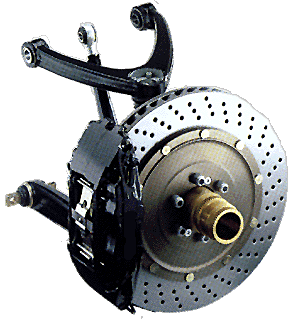
When To Know It's Time To Get Your Brakes Checked

Here are 5 ways to know that it is time to get your brakes checked or replaced!

1) Worn Pads: You'll have to estimate, but generally, your pads should be at least one-quarter of an inch thick. If they're any thinner than that, it's a good idea to get them changed.

2) Strange Sounds: One of the warning signs that your brakes need servicing can come from a small indicator in your braking system that emits a high-pitched squeal when your pads need replacing. And, while this sound is loud enough to be heard even when the windows are up, it might be tough to hear with Lady Gaga blaring from the stereo.

3) Pulling: Has your car ever felt like it has a mind of its own? As if it wants to make right- or left-hand turns while driving or braking? If so, this could indicate a problem with the braking system. Pulling, however, doesn't always indicate a problem with the brakes. The cause could also come from unevenly inflated or worn tires, poor alignment or a problem with your vehicle's suspension.

4) Vibrations: Generally, a vibrating brake pedal indicates warped rotors. Their uneven surfaces will thrum against the brake pads, and you'll feel the feedback through the brake pedal.

5) Temperamental Pedal: A mushy pedal, one that goes practically to the floor before engaging the brakes, could indicate worn pads or a problem with the hydraulic system, such as air in the line, an air leak or a brake fluid leak.

Courtesy of HowStuffWorks.com: http://bit.ly/1fEBTxd

Friday, February 28, 2014

Top Five Feel Good Songs!

Here are some great songs to start off the weekend right!

5. We Are the Champions - Queen

4. Let It Be - Beatles

3. Don't Stop Believin' - Journey

2. Good Life - OneRepublic

1. What a Wonderful World - Louis Armstrong
 

Thursday, February 20, 2014

These Apps Are Great For Saving Time On Commutes

We all know that Traffic Technology is evolving at the speed of light. Also, the moment you drive off the lot you might find out that some insane new technology just came out! For this reason, we’ve compiled the best apps you can download to help you save time on your work commute. It will help you avoid, accidents, traffic, police stops and radars or basically anything that will prevent you from getting home fast.


Garmin Street Pilot 

This expensive software with photo- realistic mapping and right-now prompts, which worked well even when you are cruising through rural areas without a cell signal. That detail and immediacy are the result of maps that live locally on your smartphone, not in the cloud. Another distinguishing feature is Garmin's awesome mass-transit database. The app can route you to the nearest parking garage and it will drop a virtual pin on the map to help you remember your car's location. It even knows the bus schedule and will help you find the nearest Bus/Metro/Ferry stop. Live traffic information is provided by Here and augmented by crowd sourced data.


Waze

Recently purchased by Google we still need to say, it's not Google Maps with added directions. The maps and routings are built by 50 million worldwide users. Traffic data in the U.S. is based entirely on the progress of "wazers" currently driving. These generous volunteers provide information on speed traps, accidents, and other road events, which fellow wazers confirm and update. But Waze needs an internet connection; lose service and most of the info is unavailable. The police and traffic warnings are highly reliable, and points-of-interest searches are augmented by larger databases such as Google, Yelp, and Foursquare. This is basically a game-changer in the Traffic Apps of the world.


Scout

This product comes from mapping- and traffic-service provider Telenav, so they know what they are talking about.In case you don’t know who they are, they are the inventors of In-Car Mapping systems. We like the layers of information that come with directions, such as weather forecasts. Two other features stand out: OnMyWay texts contacts that you're en route, and the Meet Up function lets multiple users see the others' progress in real time. Scout also acts as an event guide, with listings of movie times, concerts, and so on. In-app upgrades include speed traps and speed cameras. Like Waze, Scout's prompts may be a beat slower than those of Garmin's StreetPilot, but, hey—it's free! We also love that you can choose a monster truck as the icon for your car. Basically, this is a very contender! Don’t miss out on it.


Trapster 

Directions and traffic alerts aren't the only ways to improve your commute—apps can also help you steer clear of cops, drive green, or find a charge. For those averse to tickets and fines, Trapster uses voice prompts to flag red-light and speed cameras along with known speed traps. Data is crowd sourced from 20 million users, and accuracy is solid.

Thursday, February 13, 2014

Interesting Commutes From Around The World

Tired of rush-hour traffic? Exhausted from hour-long drives to work? These people's commutes will make yours look like a walk in the park!

1. Anyone who has to drive along the North Yungas Road in Bolivia. Where's that horse and buggy when you need it?


2. Anyone hoping to get on this train in Beijing. Claustrophobia is a valid excuse for being late to work... we hope.

 
3. Anyone who constantly has to risk their life by driving under the Devil’s Nose. Must be quite a sight when it rains.


4. Anyone who has no choice but using a zip line to get to town in Colombia. For a handful of families living there, zip lines are the only way to cross a river and not a source of recreational amusement.


5. Anyone who has to cross the Hussaini Bridge in Kashmir. The bridge divides a village in two - on one side are houses, on the other are farms. What was that old saying about a house divided?

Thursday, February 6, 2014

Chinese New Year: The Year of The Horse

While the New Year (January 1st) is the one we are traditionally used to, another new year is a very important one amongst many around the world. That is the Chinese New Year. It is the Lunar New Year and the Chinese Year of the Horse.  The horse is part of a 12-year-cycle of animals that make up the Chinese zodiac.  These interact with the five elements: wood, fire, metal, water and earth.  2014 is the year of the wood horse.

The spirit of the horse is recognized to be the Chinese people's ethos – making unremitting efforts to improve themselves. It is energetic, bright, warm-hearted, intelligent and able. Ancient people liked to designate an able person as 'Qianli Ma', a horse that covers a thousand li a day (one li equals 500 meters).